Ford
This Week in Ford Times: Your Thanksgiving Turkey Is Smarter Than You Think
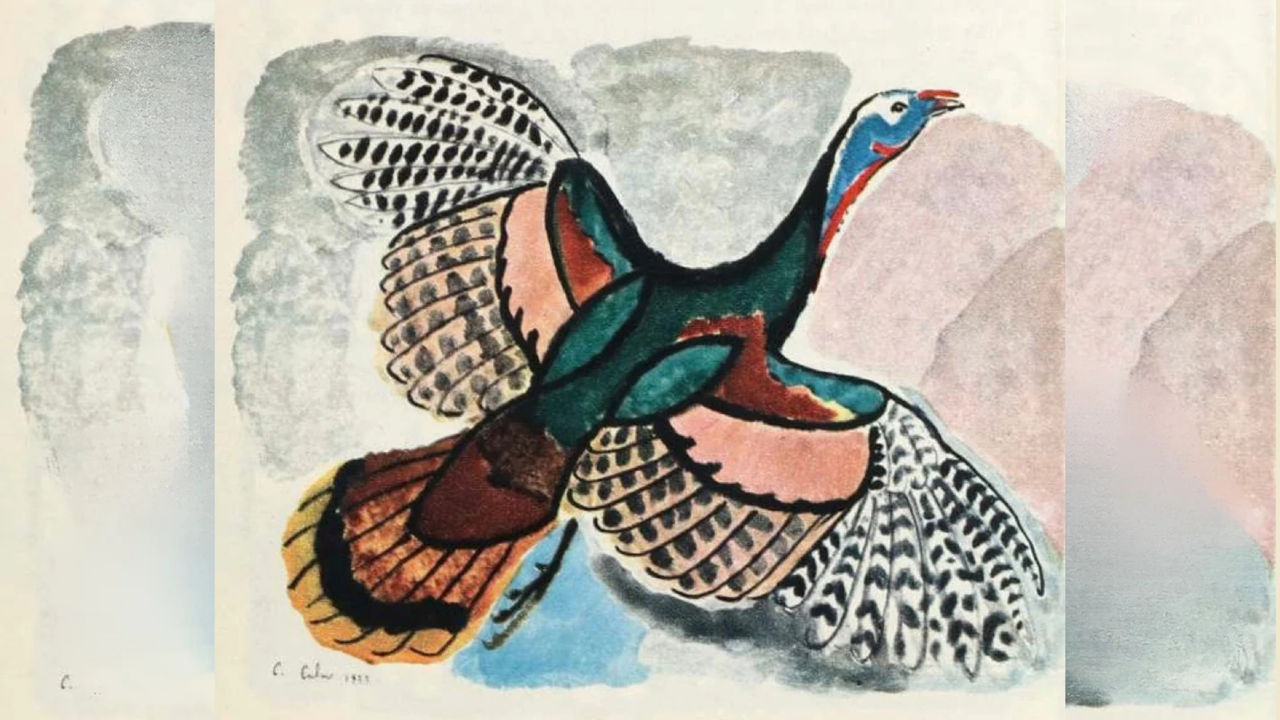
A Hunter's Verdict, Proven in the Field
An old Florida hunter once summed up the wild turkey with a simple declaration: turkeys have got sense, and more kinds than we know about. In a November 1956 issue of Ford Times, wildlife biologist Durward L. Allen took that observation seriously and set out to document it firsthand.
Allen positioned himself in a blind with roughly a dozen wild turkeys nearby. Rather than providing an easy observation, the flock refused to cooperate. The birds lingered in surrounding brush, standing tall and apparently peering straight through the canvas and palmetto screen before quietly disappearing. Allen described the behavior as classic Cautious Tom — a portrait of a creature that relies on exceptional sight and hearing to navigate a world that had already cost it dearly.
A Bird That Defied the Odds
By the time Allen wrote his piece, the wild turkey had already survived the loss of 99 percent of its original habitat. That statistic alone frames the bird not as a symbol of abundance but as a remarkable survivor.
Allen's reporting goes further, detailing biological traits that set the wild turkey apart from its domestic counterpart. A gobbler, he explains, is capable of going nearly a month without eating — an endurance that would be extraordinary in almost any bird of its size.
The turkey's journey is also geographically surprising. Allen describes how the bird crossed the Atlantic and returned, a transatlantic chapter in its history that complicates any straightforward notion of the turkey as a purely American creature. By the mid-twentieth century, Allen noted, finding a truly wild turkey had itself become a challenge — a point that underscores just how much pressure the species had faced.
Ford Times as a Window Into Mid-Century America
Ford Times was a publication that regularly featured stories reaching well beyond the automobile showroom, and the November 1956 issue is a good example of that range. A wildlife biologist hiding in a blind to study turkey behavior sat comfortably alongside the magazine's broader interest in American landscapes, travel, and natural history.
The piece is now accessible through the Ford Heritage Vault, the company's online archive of historical materials. Ford is drawing attention to it as a Thanksgiving curiosity — a nearly seventy-year-old reminder that the bird most associated with the holiday is considerably more complex than its place on the dinner table might suggest.
Readers interested in the full article can find it in the November 1956 edition through the Ford Times archive, available at FordHeritageVault.com.
More Than a Holiday Footnote
Allen's account adds dimension to a bird that is easy to underestimate. The combination of acute senses, physical endurance, and hard-won wariness described in the 1956 piece amounts to a profile of genuine wildness — one that managed to persist even as habitat disappeared around it.
Whether the turkey at the center of a Thanksgiving table gets any credit for that history is another matter. But the Ford Times archive suggests that at least in 1956, one wildlife biologist thought the story was worth telling in full.
Source: Ford Newsroom.