Alfa Romeo Unveils Cuorerosso Concept at 2026 Paris Motor Show
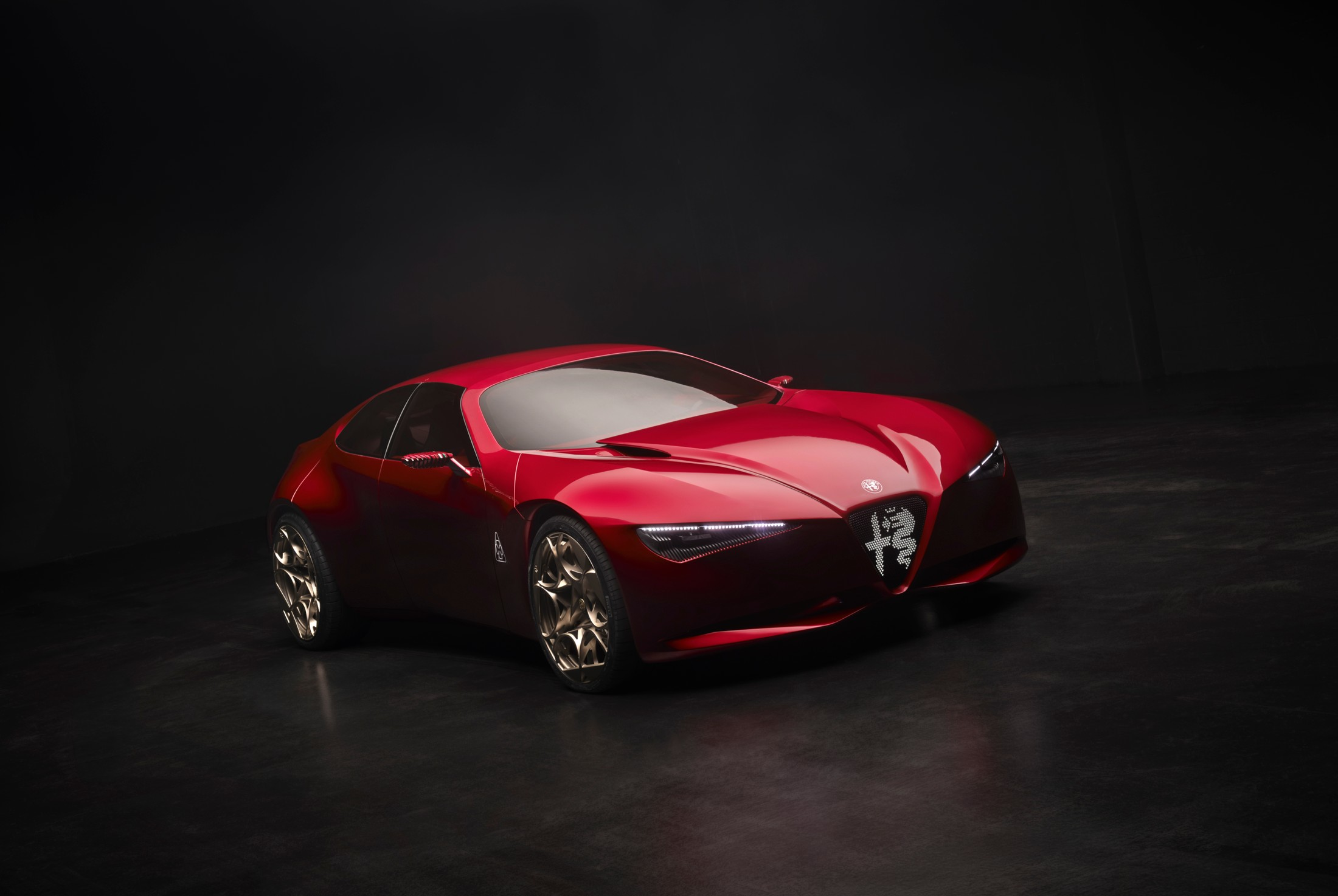
The striking 2+2 coupé concept is described as a design manifesto for the brand's future direction across electrification and performance
Alfa Romeo has taken the wraps off the Cuorerosso, a concept car that made its world debut at the 2026 Paris Motor Show, according to a release published by Stellantis North America Media dated October 12, 2026. The brand characterizes the car not as a preview of a specific production model or a styling exercise, but as an authentic manifesto intended to guide the design language and values of future Alfa Romeo vehicles as the brand enters a new era of electrification.
The name Cuorerosso blends the Italian words for heart and red, two elements the brand says are central to its identity. According to the Stellantis North America Media release, the concept is built around three intertwined themes: the Italian spirit, expressed through a philosophy the brand calls Bellezza Necessaria, or Necessary Beauty; sportiness, understood as a drive toward dynamism and driving pleasure; and the color red, which the brand frames as a symbol of performance and passion throughout its history.
In terms of dimensions, the Stellantis North America Media release states the Cuorerosso measures 4,700 mm in length, 1,980 mm in width, and just 1,331 mm in height, with a 2,930 mm wheelbase and a stated weight of 1,750 kg. The low, wide silhouette is described as a 2+2 coupé designed to blend Gran Turismo character with the visual presence of a high-performance sports car. The release reports the car achieves a drag coefficient of 0.28, attributing this to the car's uninterrupted body form, a Coda Tronca truncated tail, and an integrated underbody diffuser.
Design cues specific to Alfa Romeo's heritage appear throughout. The Trilobo front fascia incorporates the Scudetto shield and headlights described as resembling a pair of eyes with deliberate natural proportions. The Scudetto grille features a mesh of small backlit triangular elements said to reference the historic Cross and Biscione symbols, creating what the release describes as a heartbeat-like light signature. The rear is dominated by a Scudetto-shaped rear window integrated into the body volume, while two circular lights occupy the Coda Tronca. Door handles are eliminated entirely, with doors opening via a touch control on the roof, and rear-hinged doors are said to make entry into the cabin more dramatic. The forged wheels reinterpret the brand's classic telephone-dial design through six circular elements arranged across three spokes.
The body color is identified as Liquid Ink Red, described as being achieved through a combination of a fine aluminum base and a transparent color layer designed to give the surface the visual depth of liquid metal or incandescent lava, shifting toward black as the viewing angle changes.
Inside, the release describes an environment oriented around the driver, with four individual seats, an elongated center console, and a dashboard inspired by the architecture of the 1967 33 Stradale and the recently launched version of that car. A feature called the Cannocchiale Vivente, a reinterpretation of the brand's traditional dual-telescope instrument cluster, offers two configurations: one maintaining the conventional two-element layout, and another in which both telescopes merge into a single unit, referencing the minimalist instrumentation of historic racing cars. The release states this technology has potential for further development within STLA SmartCockpit, Stellantis's digital platform. Three driving modes — Cruise, Sport, and Quadrifoglio — are said to adjust the level of information and driver interaction accordingly. A steer-by-wire system is also noted, along with haptic and acoustic feedback through the steering wheel. The center console incorporates a feature called the Magma Screen, combining a touch-sensitive digital surface with a rotary dial, driving mode selector, and paddle controls.
For materials, the release highlights Poltrona Frau nubuck used only in areas of direct occupant contact, alongside Alcantara, titanium-toned metals, and a regenerated leather said to contain 60 percent post-industrial waste from premium upholstery processing. A monofilament fabric for the dashboard is described as having been developed in collaboration with Luna Rossa, drawing on technical sailing apparel.
On the powertrain side, the Stellantis North America Media release states that the Cuorerosso anticipates a multi-energy approach that will encompass full electric, plug-in hybrid, mild hybrid, and full hybrid options. As an illustration of peak performance potential, the release describes a hypothetical full-hybrid 2.9-litre V6 powertrain paired with Q4 all-wheel drive, a torque converter, and a carbon fibre transmission shaft, though this is presented as a conceptual expression rather than a confirmed specification.
The Stellantis North America Media release also notes that the Centro Stile design team moved quickly from initial sketches — described as taking only one to two weeks — directly into three-dimensional modeling, treating the car as a single block to be sculpted before wheels, glazing, and details were added. The Cuorerosso also carries the Quadrifoglio symbol, signaling that future models may include high-performance variants under that designation. The release states that the brand's future lineup will target vehicles of up to 4.7 metres in length, built on flexible, multi-energy architectures.
AutoWorld Take
Source: Stellantis North America Media