Ferrari Revisits the F50 GT, the V12 Race Car That Never Reached Its Planned Campaign
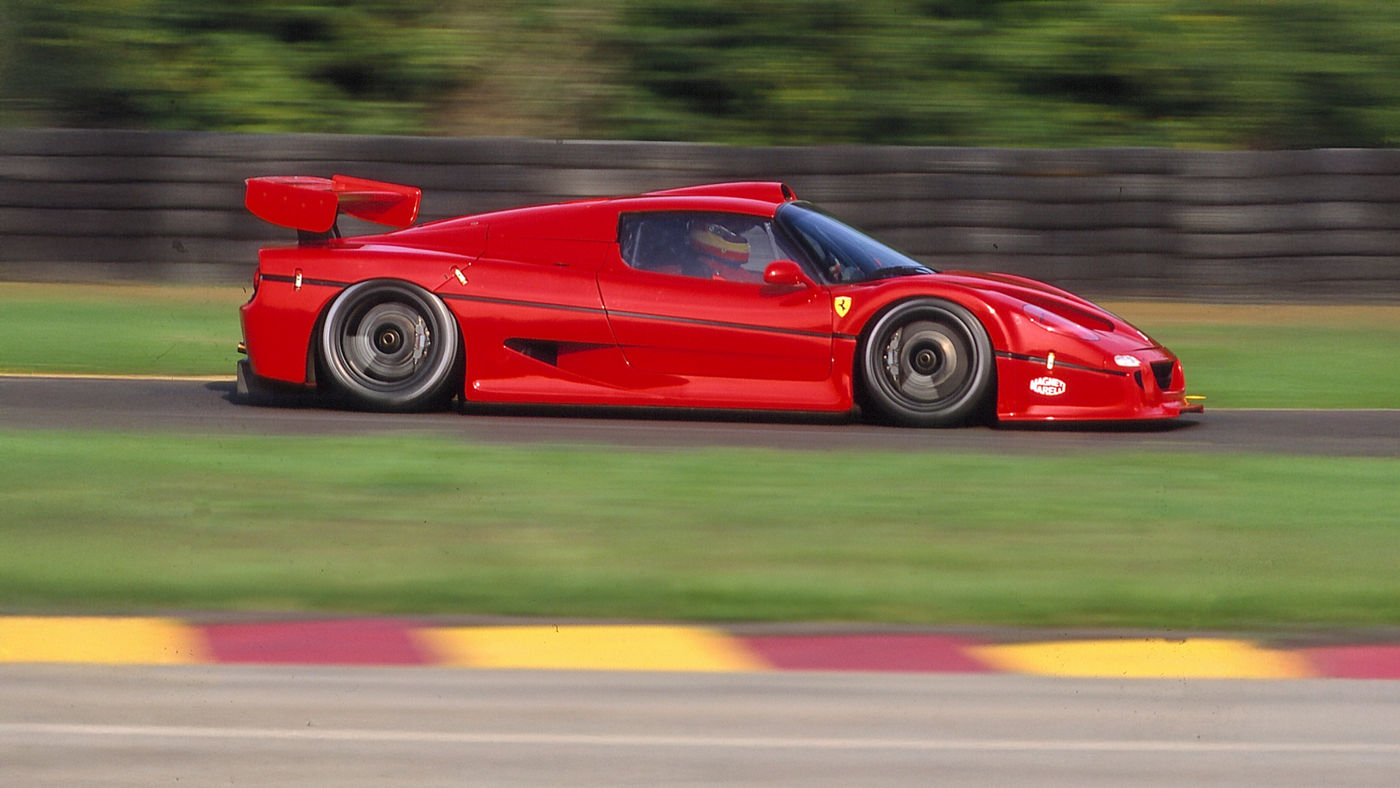
Ferrari’s 30-year retrospective explains how the F50 GT gained major aerodynamic changes and a 750-cv V12 before the program ended after three cars.
Ferrari has revisited one of its least familiar competition projects: the F50 GT. In an October 6 retrospective marking its 30th anniversary, the manufacturer outlined how the road-going F50 became a much lighter, more powerful race car—and why its planned racing future never materialized.
The project grew out of the revival of international GT competition in the 1990s. Ferrari says the BPR Global GT Series provided the impetus, following racing appearances by versions of the F40. Development moved to the F50, whose carbon-fiber structure, push-rod suspension and V12 offered an unusually specialized starting point.
The changes went well beyond removing road equipment. Ferrari describes a fixed roof with an intake above the cockpit, a substantially revised rear section and a large rear wing on a central support. Raised exhaust outlets created room for a diffuser, while a deeper front splitter and enlarged cooling openings altered the front of the car.
Inside, equipment was stripped back for competition. Ferrari puts the GT’s dry weight at approximately 860 kilograms, around 370 kilograms below the road car. Dry weight is not the same measure as a fueled, ready-to-drive vehicle weight, so those numbers should not be compared directly with modern curb-weight specifications.
The 4.7-liter V12 was developed to produce 750 cv at 10,500 rpm, according to Ferrari, paired with a six-speed sequential transmission. The unit cv denotes metric horsepower; AutoWorld is retaining the manufacturer’s original unit rather than presenting it as an identical SAE horsepower figure.
Despite the development work, Ferrari says the program was canceled in 1996 after only three examples were produced, as the company concentrated more of its resources on Formula 1. The retrospective describes contemporary performance estimates and testing reports, but those should not be confused with a completed international racing record.
This is a historical feature, not a new-car announcement or an offer of a road-legal model. The official photograph shows the F50 GT itself, recognizable by its roof intake, low competition bodywork and prominent rear wing—not a standard F50 substituted for the race car.
AutoWorld Take
Source: Ferrari News