From MISAR to the CCU: How GM's Five-Decade Computing Legacy Is Reshaping the Modern Car
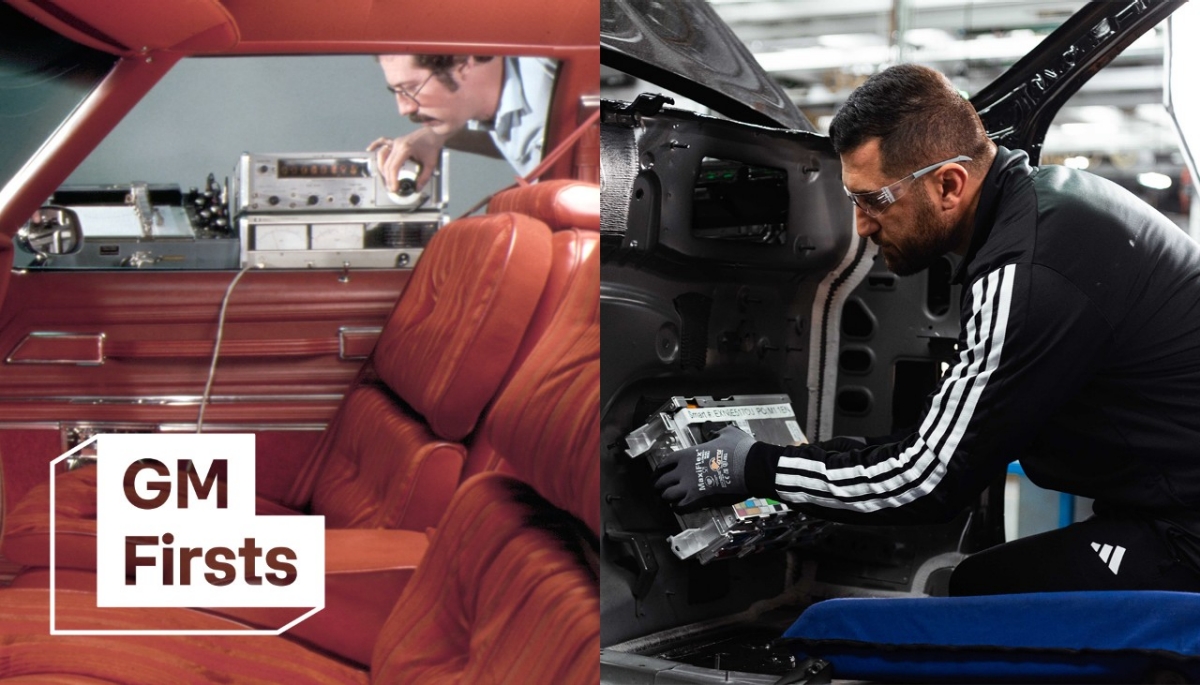
A November 2026 post on GM's newsroom traces the automaker's microprocessor history from the 1977 Oldsmobile Toronado to a forthcoming centralized compute architecture set to debut in a 2028 Cadillac.
General Motors is drawing a straight line from a spark-plug timing computer fitted to a 1977 Oldsmobile to a liquid-cooled central compute unit planned for a future Cadillac SUV, arguing in a November 12, 2026 post on its newsroom that both moments represent the same kind of architectural leap.
The story begins in 1976, when GM introduced what it describes as the first microprocessor deployed in a production passenger vehicle. The system, called Microprocessed Sensing and Automatic Regulation — MISAR — appeared on the 1977 Oldsmobile Toronado and used a digital computer to determine precisely when the engine's spark plugs should fire, reading sensor data and performing thousands of calculations per second to improve fuel economy. Before MISAR, ignition timing was handled by a mechanical distributor, a design the newsroom traces to 1912 and attributes to Charles Kettering, described as a longtime head of GM Research. The newsroom notes that while electronic ignition systems existed before MISAR, none had used a digital computer.
The following model year brought another first at a different GM brand. The 1978 Cadillac Seville offered what the newsroom calls the world's first automotive trip computer, available as an option. The digital display could show range, average speed, average fuel economy, elapsed driving time, and an estimated time and distance to a destination.
A bigger shift arrived in 1980, when GM introduced Computer Command Control, or CCC, across the majority of its model-year 1981 lineup. The newsroom describes CCC as a more capable system than MISAR, one able to manage fuel, air, and ignition simultaneously — the three elements an internal-combustion engine requires — along with emissions controls and, where applicable, the transmission. CCC also gave the auto industry its first on-board diagnostic system, allowing the vehicle to alert drivers to potential faults and helping technicians identify and address problems. John R. Wilson, identified in the newsroom piece as General Manager of GM's AC division, is quoted in a 1980 publication calling CCC the most effective engine management system ever developed, and crediting it with enabling GM to meet 1981 emissions standards without sacrificing fuel economy or performance.
Over the decades that followed, the proliferation of microprocessors accelerated. The newsroom notes that the most complex modern vehicles can contain up to 150 separate electronic control units, each responsible for a narrow set of tasks — covering areas such as the engine, chassis, infotainment, driver assistance, and comfort systems. That fragmentation has created problems of its own: the units operate in different computing languages, cannot share processing power, and make capabilities like over-the-air software updates, artificial intelligence features, and autonomous driving systems difficult to implement.
GM's proposed solution is a central compute unit, or CCU, intended to consolidate the work handled by those many individual controllers. According to the newsroom, the CCU is a liquid-cooled unit with AI processing capacity equivalent to as many as 35 laptops. Rather than running wiring to every component throughout the vehicle, GM's architecture groups components by physical location — front left, front right, and rear zones — each connected to an aggregator that communicates with the CCU over high-speed ethernet, an arrangement the company says reduces wiring complexity, weight, and cost.
The 2028 Cadillac ESCALADE IQ is identified in the newsroom post as the vehicle that will introduce this new electrical and compute architecture. The piece says additional EVs and internal-combustion-engine vehicles are expected to follow, though no further models or timelines are specified in the source.
Gary Cygan, identified as GM's Director of Software and Electronics Engineering, is quoted in the piece describing the shared platform as a force multiplier: a software capability or update validated on one vehicle can be carried over to others, meaning a fix or improvement could benefit far more customers than those driving the specific model on which it was developed. Cygan uses the word "flywheel" to describe the dynamic — more compute power and vehicle data generating more learning opportunities, with each solution strengthening the broader fleet over time.
The newsroom frames the arc as a fulfillment of a prediction made by Pete Estes, identified as GM president at the time of MISAR's introduction. Estes is quoted describing a future where onboard digital technology would expand from ignition control into readouts, diagnostics, braking, and ultimately a single central computer managing all vehicle systems. The CCU architecture, GM argues, is that computer.
AutoWorld Take
Source: General Motors Newsroom