How Rivian's Vertically Integrated Software Stack Powers Halloween Mode
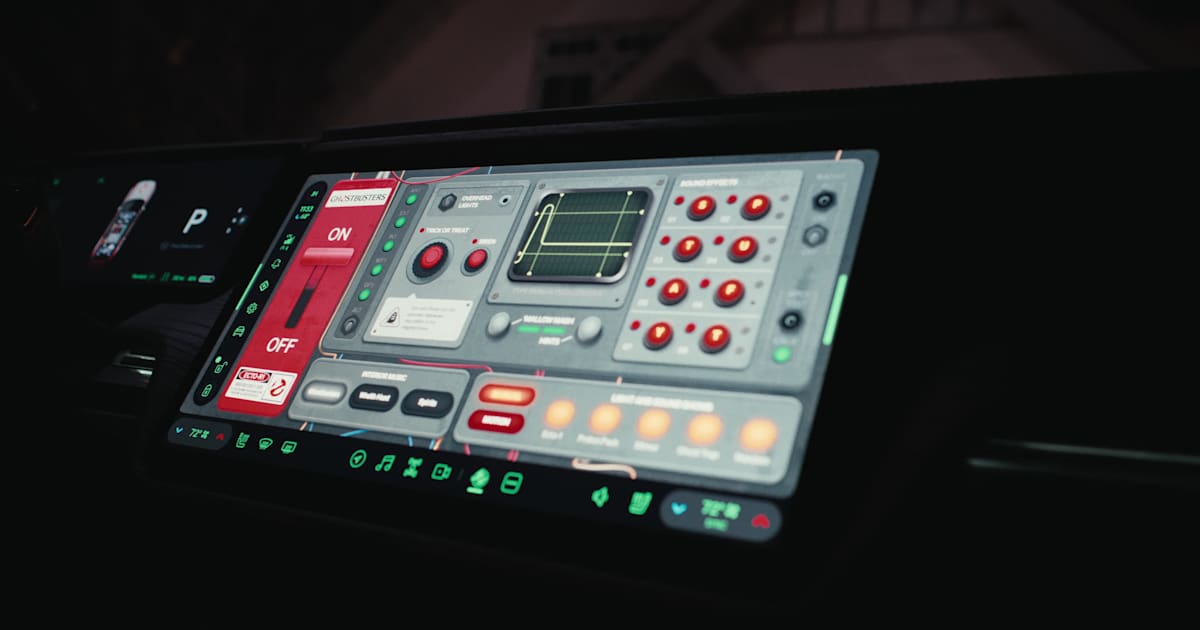
A single over-the-air update and a fleet-wide switch turned every Rivian into a Ghostbusters vehicle for Halloween 2026, offering a window into how the company's in-house hardware and software approach works
For Halloween 2026, Rivian delivered a Ghostbusters-themed vehicle transformation called Halloween Mode — and according to a story published on Rivian's website, the feature is a direct demonstration of what the company calls its vertically integrated hardware and software approach.
The Halloween software arrived with update 2026.36 on October 7, according to the Rivian source. Then, at 4 a.m. local time on October 9, Rivian activated Halloween Mode simultaneously across its entire fleet, the mobile app, a companion watch app, and Rivian Adventure Network chargers — all without pushing a new software update to any vehicle. The mode is set to switch itself off the same way on November 2.
Engaging the feature is designed to feel simple for owners: tapping a Ghostbusters icon on the center screen, asking Rivian Assistant to activate it, or selecting a Trick or Treat card in the mobile app. Behind that tap, according to the Rivian source, an infotainment computer sends an instruction across a high-speed ethernet backbone connecting three zonal controllers the company designed in-house. Because those controllers share a single software stack, exterior lights, audio systems, and displays across the vehicle receive their cues at the same moment.
Rivian describes its vehicle architecture as a network rather than a collection of parts. Rather than using dozens of separate electronic control units — many sourced from outside suppliers with their own software timelines — the company uses three zonal controllers running Rivian-written software to manage complex behavior logic. The Rivian source says this approach underpins the ability to ship coordinated, multi-system experiences like Halloween Mode in a single update.
The company's R2 uses the same ECU layout introduced on R1 Gen 2, but reportedly takes simplification further, with 2.3 miles less wiring and 60 percent fewer in-line connectors than Gen 2. The Rivian source notes that fewer connectors mean less weight, lower cost, simpler assembly, and fewer potential failure points.
All three current vehicle generations — R1 Gen 1 (model years 2022–2024), R1 Gen 2 (model year 2025 and beyond), and R2 — now run RivianOS 2, which the source describes as the company's most wide-ranging OTA update to date, bringing a reimagined interface, route alerts, and dynamic controls across the lineup. Because all vehicles share one operating system, updates are tailored to what each vehicle's hardware can physically support. The new Ghostbusters lock sounds illustrate this: R1 Gen 1 receives the Ecto-1 sound, while R1 Gen 2 and R2 add Proton Pack and Chant sounds, all delivered through the same update.
The Rivian source attributes a quote to Wassym Bensaid, identified as Rivian's Chief Software Officer and Co-CEO of Rivian Volkswagen Group Technologies, suggesting the software stack was built to scale beyond Rivian itself, and that Halloween Mode serves as a demonstration of that vertically integrated approach.
Rivian's website says the company has delivered near-monthly software updates over the past three years, covering new drive modes, autonomy upgrades, user experience changes, and AI-powered tools including Rivian Assistant.
AutoWorld Take
Source: Rivian Newsroom