Mercedes-Benz Maps Out Powertrain Expansion With Nearly 30 Model Launches by 2028
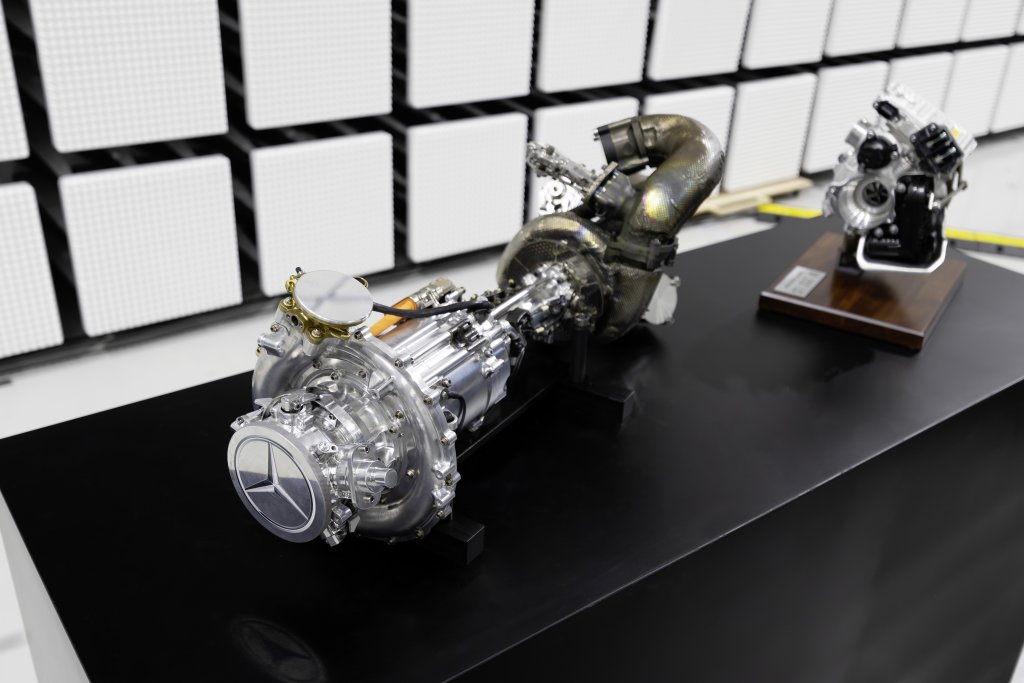
From in-house electric drive units to solid-state battery tests and a Formula 1-derived electric turbocharger, Mercedes-Benz is pursuing a broad multi-powertrain strategy ahead of what it calls the biggest product launch program in company history.
Mercedes-Benz is pursuing an unusually broad product offensive, with nearly 30 new model launches planned by the end of 2027, according to a release dated October 27, 2026, from Mercedes-Benz USA Media. The strategy centers on offering customers a choice across three powertrain paths: fully electric vehicles, plug-in hybrids, and electrified combustion engines — each developed around what the brand describes as real-world customer usage data rather than a single universal solution.
The company says its development process begins with translating actual driving behaviors — acceleration patterns, towing loads, hill starts, motorway cruising — into engineering targets. These targets are first evaluated through computer simulation, then validated on test benches under load and temperature conditions, before any physical vehicle testing begins. The brand attributes this methodology, combined with more than 140 years of accumulated engineering experience, to what it describes as the consistent driving character found across its lineup regardless of powertrain type.
Central to the electric vehicle side of the strategy is a modular powertrain architecture the brand says was derived from its VISION EQXX technology program. According to the Mercedes-Benz USA Media release, this architecture is currently deployed in the CLA, GLB, GLA, GLC, and C-Class, with an 800-volt version being scaled up for larger models including the E-Class and S-Class. The electric drive unit at the heart of these systems — designated EDU 2.0 — was developed entirely in-house and is manufactured within the brand's own production network. It incorporates a two-speed gearbox with a dog clutch, which the brand says resolves the typical trade-off between torque, top speed, and energy consumption. Silicon carbide in the inverter is cited as a further efficiency measure, and the 800-volt system extends to ancillaries including the air-conditioning compressor, which the release describes as a first in the entry-level segment.
For combustion-engined models, Mercedes-Benz applies what it calls the FAME architecture — Family of Modular Engines — spanning vehicles from the GLA to the S-Class. Common engineering features across this range include an all-aluminum crankcase with the brand's NANOSLIDE coating technology, a cylinder head with a partially integrated manifold, a segmented turbine turbocharger, and a compact intercooler arrangement. A new variant of the 1.5-liter M 252 gasoline engine, designated the M 252 LS, has been developed with an electric exhaust gas turbocharger producing 7 horsepower, powered by the 48-volt onboard electrical system. Total output is listed at 228 hp plus 30 hp from an integrated starter-generator, making it what the brand describes as the most powerful four-cylinder in its compact class. The technology is said to be adapted from electric turbocharger work conducted by Mercedes-AMG High Performance Powertrains in Brixworth, England — the Formula 1 powertrain subsidiary — which the brand credits with contributions to eight Formula 1 World Championship titles. The M 252 LS is projected to reduce CO₂ emissions in the compact segment by up to 17 percent compared with the previous M 260 engine, and includes two Lanchester balance shafts to reduce vibration.
Battery development is framed by Mercedes-Benz as a core strategic competence. The brand is working on a cathode chemistry combining lithium manganese oxide and nickel manganese cobalt oxide, which it says uses more manganese and less cobalt and nickel to balance energy density against cost. Further ahead, the company is developing lithium nickel manganese oxide chemistry, which would eliminate cobalt entirely and require significantly less nickel than current NMC cells. The brand claims this chemistry's high-voltage capability — potentially up to five volts — could yield range advantages of up to 30 percent over lithium iron phosphate cells at comparable weight and packaging, though this is presented as future potential rather than a deployed specification.
On solid-state batteries, Mercedes-Benz USA Media reports that the brand has already tested a lithium-metal solid-state battery developed with strategic partner Factorial Energy under real-world conditions in an EQS, covering 1,205 kilometers from Stuttgart to Malmö without recharging. Separately, the brand is evaluating ProLogium's Gen4 solid-state cell technology for performance, safety, and thermal characteristics as part of an assessment for potential future series production. Additional solid-state cell testing is underway with other unspecified partners and with cells developed internally, with the release noting involvement of Formula 1 powertrain expertise from the Brixworth facility.
A software layer ties the various powertrain approaches together. The Mercedes-Benz Operating System — MB.OS — is described as integrating key vehicle functions into a single updatable system across all powertrain types, with a standardized architecture intended to create software synergies between combustion and electric programs alike.
Alongside the product program, the brand is marking 140 years since Carl Benz filed the patent for the first automobile. A rolling celebration titled "140 Years. 140 Places" involves three new S-Class sedans traveling to 140 locations across six continents, with the drive running through October 2026.
AutoWorld Take
Source: Mercedes-Benz USA Media