Nissan Reports First-Half Progress, Reaffirms Full-Year Financial Outlook
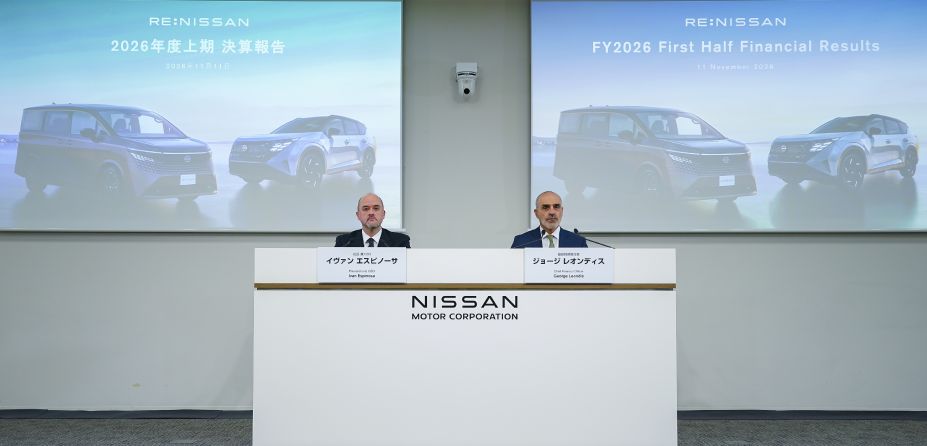
The automaker swung to an ¥80 billion operating profit in the six months ended September 30, 2026, while its Re:Nissan restructuring plan delivered ¥110 billion in cost savings; a full-year operating profit target of ¥200 billion remains in place despite a trimmed global sales forecast.
Nissan Motor Co., Ltd. reported its financial results for the first half of fiscal year 2026 — the six months through September 30, 2026 — on November 11, 2026, according to a press release issued by the company via usa.nissannews.com. The Yokohama-based automaker said the period reflected improving underlying performance and greater resilience, even as market conditions in some regions remained difficult.
Global retail sales for the first half reached 1.41 million units. Consolidated net revenue came in at ¥6.072 trillion, an increase of ¥493.3 billion compared with the same period a year earlier. The most prominent swing was in operating profit, which moved from a loss of ¥27.7 billion in the first half of FY2025 to a gain of ¥80.0 billion in the current period — a year-on-year improvement of ¥107.7 billion. The operating margin rose 1.8 percentage points to 1.3 percent. Net income, while still negative at minus ¥39.7 billion, improved by ¥182.2 billion over the prior-year figure. Those results were calculated using the equity accounting method for Nissan's China joint venture with Dong Feng and were based on average foreign exchange rates of ¥159 per U.S. dollar and ¥184 per euro for the period.
Liquidity remained a stated priority. Nissan reported approximately ¥0.8 trillion in automotive net cash and ¥2.2 trillion in cash and cash equivalents at the close of the first half.
Looking at the second quarter alone, consolidated net revenue grew 8.2 percent year on year to ¥3.107 trillion, though operating profit narrowed sharply to ¥2.1 billion from ¥51.5 billion a year earlier. The company attributed the decline primarily to the absence of a one-time benefit related to lower U.S. emissions-related expenses that had been recognized in the prior-year quarter. Net income for the quarter was negative ¥43.5 billion, an improvement from negative ¥106.2 billion in the year-ago period, which the company linked to lower restructuring-related charges.
Nissan's restructuring initiative, called Re:Nissan, was credited with generating ¥110 billion in additional cost savings during the first half, the press release stated. The company said those savings contributed directly to the turnaround in operating profit and helped strengthen its underlying cost structure.
Regional performance varied considerably. In the United States, demand for domestically produced vehicles — including the Rogue, Frontier, and Pathfinder — helped drive sales growth, while a richer grade mix and pricing dynamics contributed to better revenue quality, according to the release. In Japan, the all-new Elgrand and the Kicks were described as gaining customer traction. China presented a sharply contrasting picture: Nissan cited weaker overall demand, a faster-than-expected transition toward new-energy vehicles, and intensifying competition as factors creating more pressure on sales than the company had originally anticipated. In response, Nissan said it is adjusting internal-combustion-engine production and managing dealer inventory levels while accelerating development of its N-series NEV lineup and expanding export activity.
For the full fiscal year 2026, Nissan said it is maintaining its operating profit outlook of ¥200 billion, implying ¥120 billion in operating profit for the second half. The company also said it expects automotive net cash to remain above ¥1 trillion at fiscal year-end. Sales outlooks for the United States and Japan were revised upward, but the global unit sales forecast was trimmed to between 2.97 million and 3.0 million vehicles, down from an earlier projection of 3.15 million, largely because of the China situation.
The company said it expects higher sales volumes, new model introductions, and a richer product mix to be the main contributors to improved second-half profitability. The release identified several upcoming models by market: the Rogue Hybrid in the United States, the Elgrand and Kicks in Japan, the Frontier Pro PHEV in Mexico, and the Pixo EV in Europe. Additional product reveals — including the Skyline and Patrol in Japan and the Juke EV in Europe — were also mentioned as forthcoming. No pricing, on-sale dates, or U.S. availability were stated for any of these models in the source material.
Chief Executive Officer Ivan Espinosa commented on the results, noting that the first half showed encouraging momentum in key markets, that China remains the company's most significant challenge, and that Re:Nissan continues to improve operating performance and cost structure. He also referenced expectations for momentum in Mexico and new EV opportunities in Europe in the second half. Those remarks were attributed to Espinosa in the Nissan press release.
Nissan said it plans to unveil a new business plan in February 2027 that will outline the company's direction for its next phase. The company noted that all financial forecasts are based on currently available information and are subject to uncertainty and risk.
AutoWorld Take
Source: Nissan USA Newsroom