Oxford Researchers Partner with Polestar to Study How Performance Cars Affect Drivers
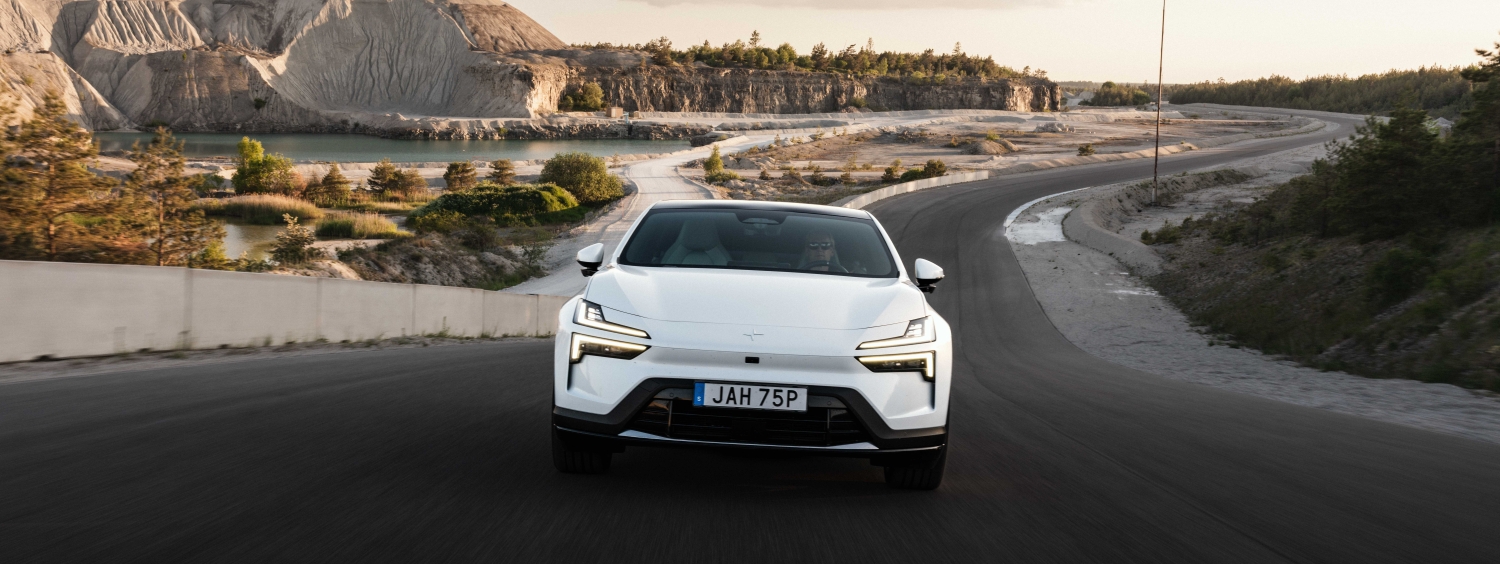
A pilot study combining biometric monitoring and vehicle telemetry reveals measurable differences in driver experience and physiological response between two variants of the Polestar 4.
Researchers from the University of Oxford's SDG Impact Lab have teamed up with Polestar on a pilot study examining how a performance car's behavior shapes the experience of the person behind the wheel. The work represents an early step toward understanding the connection between vehicle dynamics and human response, drawing on a notably broad range of measurement tools: vehicle telemetry, heart-rate monitoring, eye tracking, psychological assessments, and driver interviews.
The study took place at Gotland Ring in Sweden, where twelve drivers got behind the wheel of two Polestar 4 variants — the Rear motor and the Dual motor with Performance pack — under both calm and dynamic driving conditions. The two cars differ significantly in output: the Dual motor with Performance pack generates 400 kW (544 hp), roughly double the 200 kW (268 hp) of the Rear motor.
That power gap translated into meaningful real-world differences on matched fast laps. The Dual motor variant delivered peak acceleration 32% higher than the Rear motor while simultaneously demanding 15% less steering effort from the driver.
Drivers felt those differences clearly. On the study's Performance/Dynamics scale, the Dual motor with Performance pack scored 89.2 out of 100, well ahead of the Rear motor's 67.7. The gap carried over to overall experiential quality as well, where the Performance version posted 93.0 against the Rear motor's 77.9, with most participants favoring the more powerful variant on both measures.
Beyond subjective scores, the biometric data pointed to deeper physiological shifts during dynamic driving. Participants blinked less frequently, showed enlarged pupils, and sustained their gaze for longer periods — all patterns the researchers interpret as signs of heightened attentional engagement. Linking those physiological signals directly to vehicle telemetry allowed the team to examine driver responses in tandem with what the car itself was doing at any given moment.
AutoWorld Take
Source: Polestar Media