Rivian R1S Turns Heads on the Streets of New York City
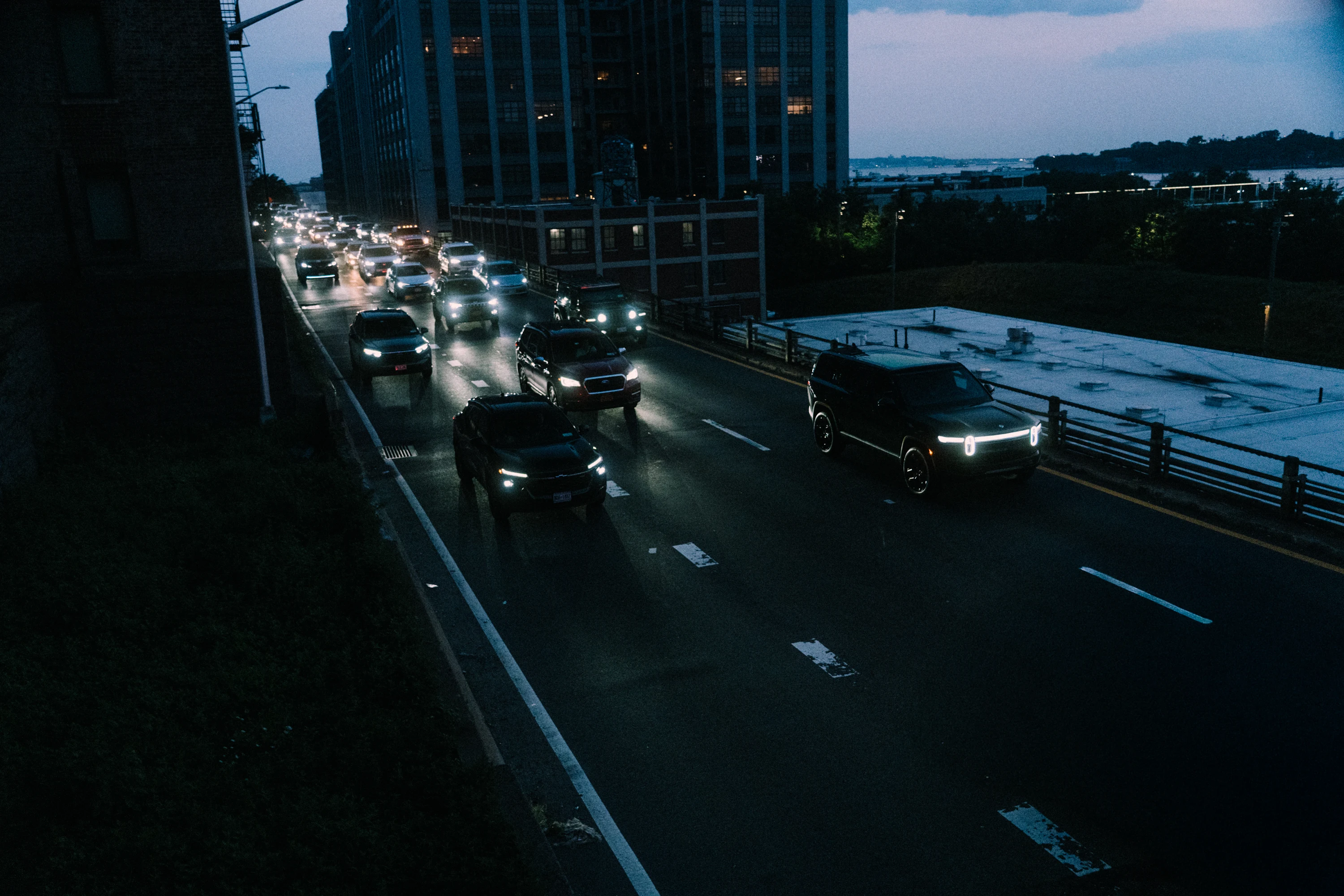
Detroit-rooted photographer Mo Mfinanga takes Rivian's electric SUV through Manhattan and Brooklyn, finding unexpected attention and a new way to think about what a car means in the city
Mahmoud "Mo" Mfinanga had a reasonable expectation heading into his first commissioned automotive shoot in New York City: that nobody would pay much attention. New Yorkers, as he understood them, had seen everything. What he found instead was that the Rivian R1S drew strangers into spontaneous conversation at nearly every turn — people leaning in through open windows to ask about specs, pricing, and how it stacked up against what they drove.
Mfinanga, who grew up in Detroit and relocated to New York, brought a dual perspective to the project. In Motor City, admiring and detailing cars on the street is a cultural ritual. In New York, the relationship between residents and their vehicles is more complicated — shaped by scarce parking, robust public transit, and the recurring question of whether owning a car in the five boroughs makes sense at all. That tension became the animating question behind his work: what does a car mean in New York?
According to a feature published on Rivian's website, Mfinanga described New York as one of the hardest places to photograph a car. Scouting clear frames and chasing useful light through the narrow, shadowed corridors between skyscrapers requires constant negotiation — a sharp contrast to open landscapes, which he called "cheat codes" by comparison. His solution was to lean into nighttime shooting, when artificial light simplifies the visual field and city glow plays across the vehicle's surfaces in ways that daytime clutter obscures.
The approach produced images that Mfinanga described as unexpectedly warm, departing from what he characterized as his typically colder visual style. Some frames place the R1S against architecture that seems to absorb it; others present it as woven into the texture of an ordinary city block. The overall effect, according to the Rivian feature, reflects what he sees as New York's inherently contemplative quality — the rhythm of owning something, looking at it, and leaving it behind.
Traditional automotive photography tends to celebrate speed and open road. Mfinanga argued that approach misses how New Yorkers actually relate to their vehicles. In a city where a car spends most of its time parked in traffic or a garage, other qualities take precedence. He likened a car in New York to an expensive outfit — a statement piece visible to others even when it isn't moving. The R1S, he noted, functioned as a quiet sanctuary amid the noise of truck engines, horns, and pedestrian crowds. He said the vehicle's acoustic insulation made sitting in traffic genuinely relaxing, and that filling it with passengers turned it into what he called a private lounge — a rare commodity in the city.
Mfinanga also took the R1S out of the city entirely, making a trip to the Adirondacks that covered muddy fields, remote forest roads, and rustic campgrounds. The detour, he suggested, reflected how New Yorkers actually use their lives — not confined to the boroughs but reaching outward, with long stretches on Interstate 87 between the Tappan Zee Bridge and Lake Champlain fitting comfortably into the vehicle's range of capability.
The photographer's broader conclusion, as relayed in the Rivian feature, was that the R1S functions as what he called a strong supporting presence in daily life rather than a centerpiece — versatile enough for mountain terrain and quiet enough for city blocks. He closed with a maxim he attributed to car culture generally: if you get out of your vehicle and don't look back at it, you chose the wrong one.
AutoWorld Take
Source: Rivian Newsroom