Texas Pumpkin Giant Leans on Three Rivian R1T Pickups to Harvest Nearly 10 Million Gourds a Year
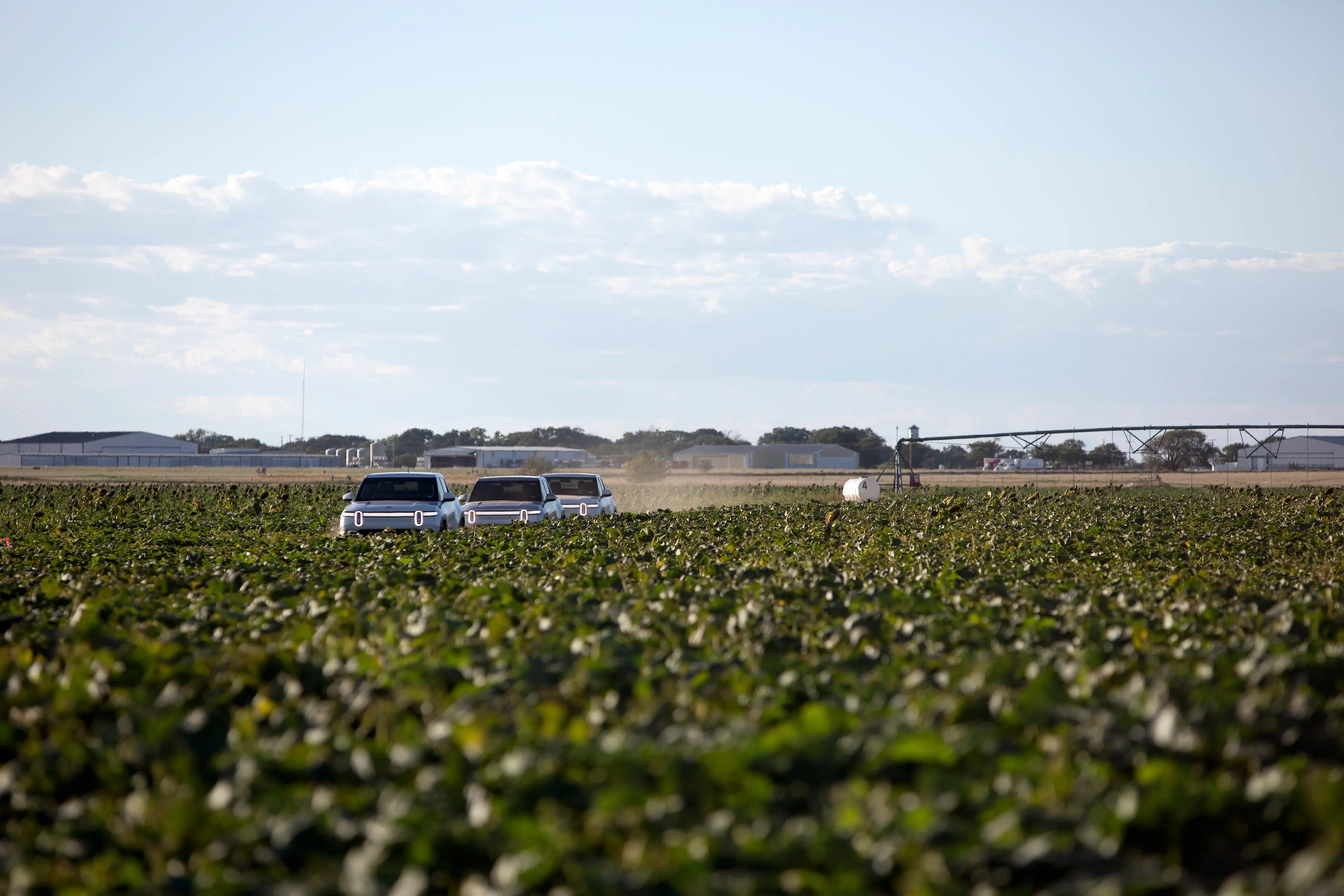
The Lusk family's Dalhart farm says the electric trucks handle brutal stop-and-go field work, tow water tanks topping 10,000 pounds, and save an estimated $5,000 per vehicle annually on fuel and maintenance
A fourth-generation farming family in Dalhart, Texas, says three Rivian R1T electric pickups have become central to running one of the country's largest pumpkin and jack-o-lantern operations — one that ships close to 10 million pumpkins in a single season.
According to a profile published on Rivian's own website in October 2026, Jason Lusk leads the family operation, which planted roughly 1,600 acres of pumpkins this season despite a heat wave that tested the crop early on. The farm relies on the R1T for a punishing daily routine that takes the trucks almost entirely off paved roads. Lusk told the publication he estimates climbing in and out of his truck close to 100 times a day, a grind he says the truck's suspension absorbs well enough that fatigue isn't the issue it once was.
The electric drivetrain appears particularly well suited to the farm's stop-and-go rhythms. The Rivian profile notes that frequent idling in gas-powered trucks typically hurts fuel economy and leaves a hot cab for drivers returning from long field walks in west Texas summer heat. One team manager described coming back to a pre-cooled cabin set to hold its temperature as a meaningful quality-of-life improvement during the heat wave.
Heavy-duty towing is also part of the workload. The farm uses the R1Ts to haul large water tanks, each weighing more than 10,000 pounds, out to the middle of field irrigation circles. Beyond towing, team members carry tools and parts in the truck's front trunk and Gear Tunnel storage compartment, which the profile says allows crew members to transport four people to lunch without unloading work gear first.
The team told Rivian's publication it calculates savings of roughly $5,000 per truck per year when combining reduced fuel and maintenance costs. The trucks charge both at the family's home and directly on the farm property, which the Lusks say simplifies logistics compared with coordinating diesel refueling.
Lusk's path to the R1T began with an R1S he purchased for his wife. After taking it to the farm a few times and finding the suspension capable, he bought a pickup. He admitted he spent the first year still relying heavily on his old gas truck, but gradually stopped wanting to drive it. Two other managers on the team, Ryan and Chris, watched that process before making their own purchases. The Rivian profile quotes Chris describing the benefit of watching Lusk test the concept first before the others committed.
The farm also uses Rally mode — a performance drive setting Rivian notes is available depending on vehicle trim and options — to move around the property. The trucks' acceleration also comes up when the team discusses passing semi-trucks on the two-lane roads surrounding the farm.
Rivian published the account as an owner story on its own platform, noting that the experience reflects this specific case and that other owners' results may differ.
AutoWorld Take
Source: Rivian Newsroom